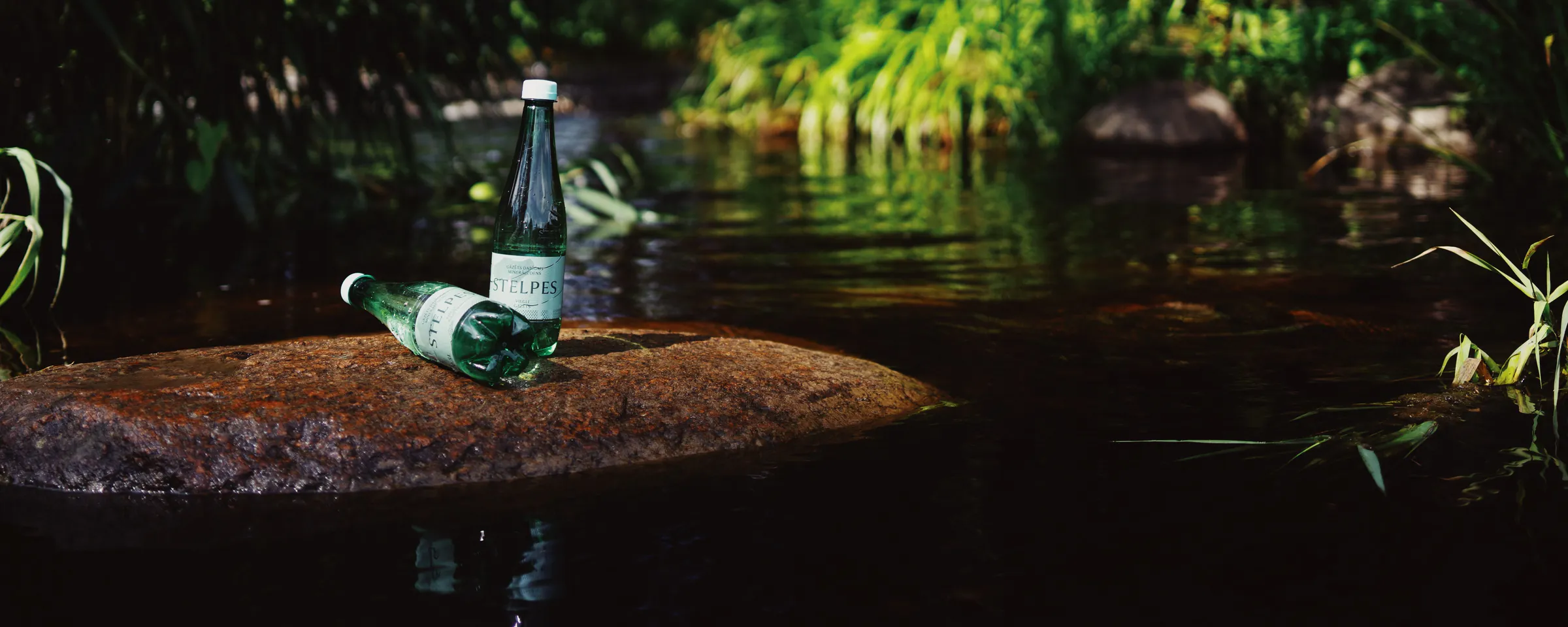
The Nīzere spring, Zemgale
From deep within the earth
Stelpe
Bauska municipality.
The heart of Zemgale.
Stelpe lies in Bauska municipality, in the middle of Zemgale. It is a place shaped by wide fields, roads and a distant horizon. Here you find old manor roads, old trees and land that generations of farmers have worked. And beneath it - water.
We chose the name Stelpes because everything starts here. Beneath this land lies water, and with it our story begins.
Where the water comes from
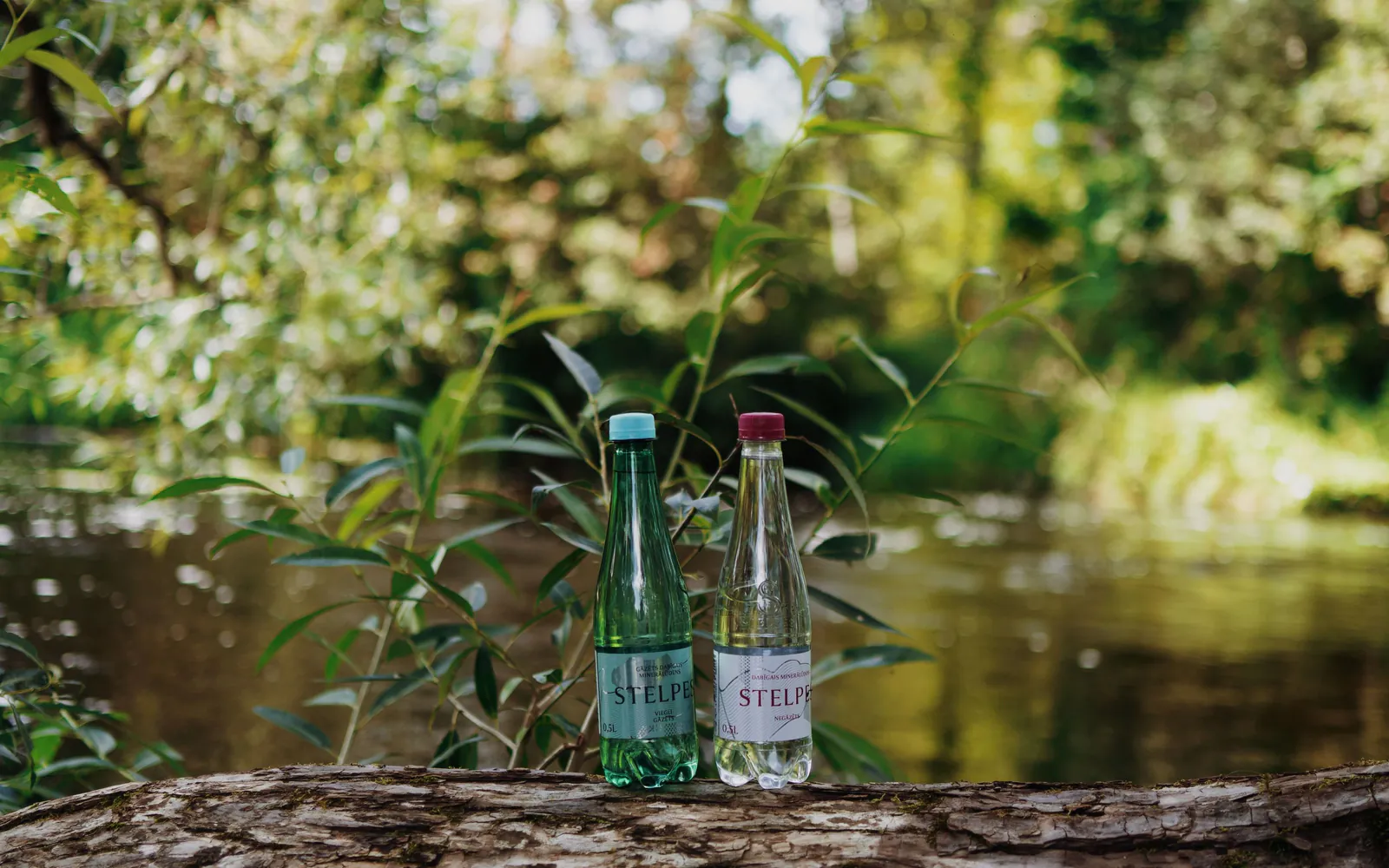
Stelpes water comes from underground. Its journey begins with rain and snow that slowly soak into the ground and sink deeper through different layers of rock. On its way through sand, clay and gravel the water is naturally filtered, taking up minerals from the rocks it flows through.
This happens slowly and naturally. The water spends time underground before it reaches the layers it is drawn from. So its composition depends not only on its surroundings but also on the structure of the layers, the water's path and the depth it comes from.
Even in one and the same place, water drawn from different depths can differ. Each underground layer has its own path and its own mineral composition. It is this natural origin and the long way through the earth that give Stelpes water its character.
Natural mineral water
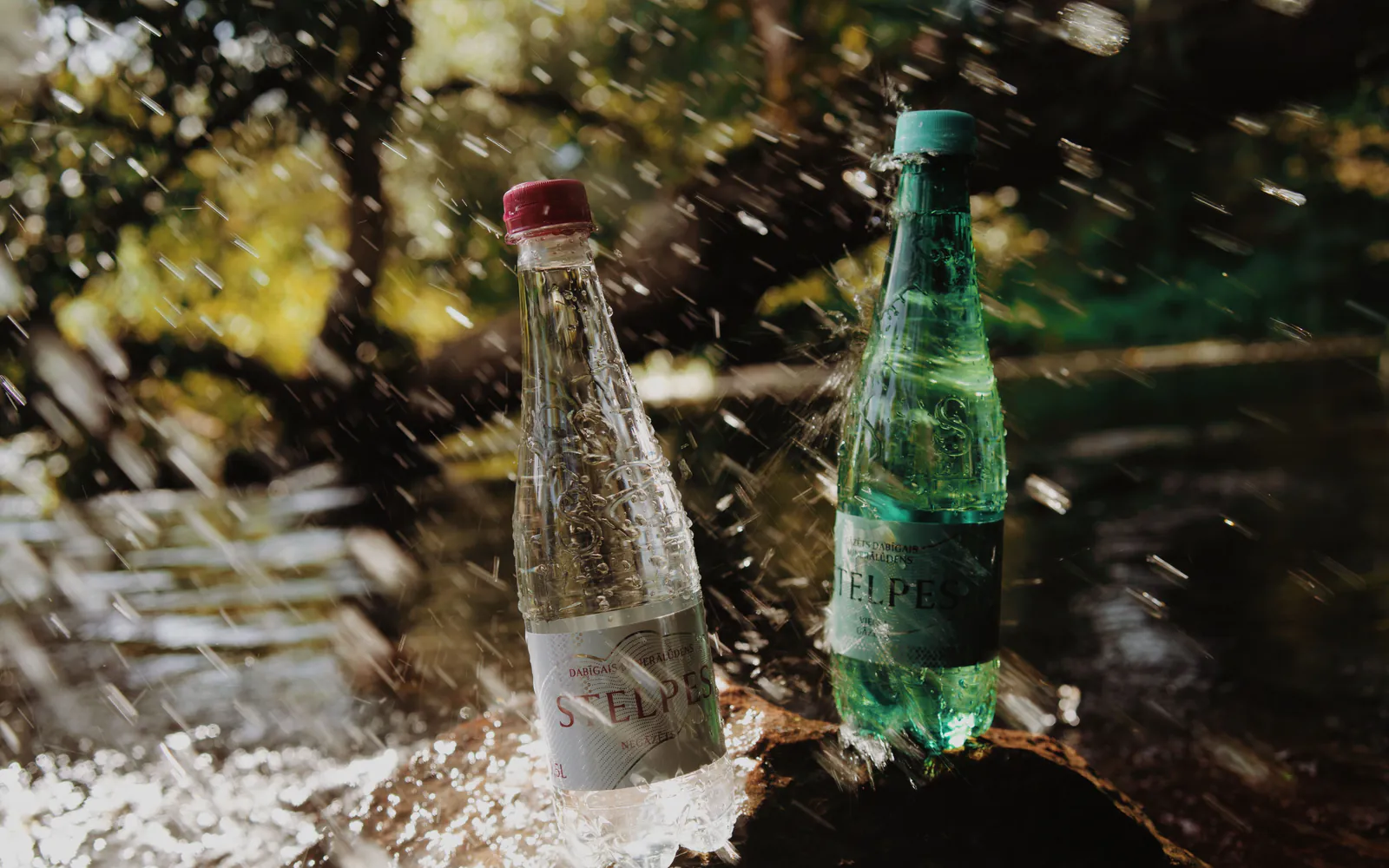
One of our two boreholes gives natural mineral water. The water here lies deeper underground and takes longer to reach the surface. Flowing slowly through the layers of rock, it naturally takes on the minerals that make up its distinctive composition.
Among the most important minerals are calcium and sulphates. They enter the water as it meets the layers of dolomite and gypsum it flows through. The sulphates are also behind the historic name of the Nīzere spring: the place used to be called a sulphur spring.
The mineral water is naturally alkaline, with a pH of 7.6–8.0, and its total mineralisation reaches 1400–2500 mg/l. Its sodium content is low, well under 20 mg/l, so the water also suits a diet low in sodium.
Nothing is added to this water and its composition is not adjusted. It is drawn just as it comes from the borehole. As natural processes underground shape the amount of minerals, the composition can vary slightly from batch to batch.
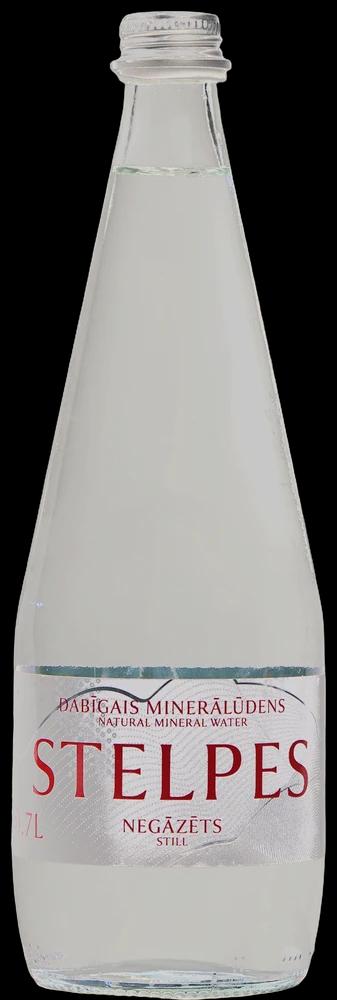
These minerals also shape the taste. It is fuller and more pronounced than ordinary drinking water, which is why mineral water goes well with food. It comes still and lightly sparkling, including in glass bottles made for the table and for restaurants.
BOREHOLE No. 16786 · pH 7.6–8.0 · MINERALISATION 1400–2500 mg/l
Spring water
The other borehole gives spring water. It lies closer to the surface and the water's way through the underground layers is shorter. So the water takes up fewer minerals, and its composition is lighter than that of the natural mineral water.
The total of dissolved minerals, the dry residue, is 451–520 mg/l, and the pH 7.4–7.9. It contains 48–60 mg/l of calcium and 27–38 mg/l of magnesium, while sulphates are only 7–14 mg/l, a small share of their amount in the mineral water.
Nothing is added to this water either. At the plant it is mechanically filtered to hold back natural fine particles, while its mineral composition stays as it comes from the borehole.
The lighter composition also shapes the taste. It is softer and more neutral, with no strong aftertaste, so this water can be drunk all day long - at home, at work, on the road or after training.
This borehole gives Stelpes drinking water, still and lightly sparkling, in many sizes - from a bottle to carry with you to larger packs for the home, the office and events.
The same borehole also gives «Mūsu ūdens», which we created together with the Latvian Olympic Committee and with which we support young Latvian athletes.
BOREHOLE «AVOTS» · pH 7.4–7.9 · DRY RESIDUE 451–520 mg/l
The plant
From the spring to the bottle
Our plant is right here in Stelpe parish, close to where the water is drawn. From the borehole the water reaches the plant through a closed pipeline about 900 metres long.
At the plant the water is mechanically filtered to hold back natural sand and other fine particles that may have entered it on its way through the underground layers. We add only carbon dioxide to the sparkling water, keeping the rest of its natural composition.
Everything else happens right here. Bottles are made, or blown, filled with water and capped. Then they are labelled and given a batch code.
The Stelpe spring has been known here for several decades. Borehole No. 16786 was drilled in the late 1980s. We have run the Stelpes MW plant since 2022, and since 2023 we have been deliberately developing production and sustainable solutions with European Union co-financing.
Quality is checked in every production batch. A water sample is taken from each batch and analysed in a laboratory. This confirms the composition and quality of the water and gives every batch a traceable quality check.
Composition
Mineral water composition
Calcium
380–650 mg/l
Calcium enters the water from the layers of dolomite and gypsum it flows through underground. A mineral water may be labelled “contains calcium” when it has more than 150 mg per litre. Stelpes mineral water has several times that.
Threshold: 150 mg/lWhat specialists say
What do specialists say about Stelpes water?

Lizete PugaNutritionist
Day to day we should drink drinking water with a reduced level of mineralisation. We can then add various mineral waters to our “drinks menu” - a glass or a larger amount. If we think about the highest standards of safety and quality, natural mineral waters should definitely come first. They differ from other drinks in their higher mineral salt content. One example of such a mineral water is Stelpes mineral water.

Jānis LeitisNutritionist, track and field athlete and Olympian
Working as a nutritionist, I have noticed that many people struggle to plan their diet so that they get enough minerals. A good way to get them is to drink Stelpes mineral water every day.
Sustainability
Caring for the spring, caring for tomorrow
Green energy
We use solar energy to get part of the electricity Stelpes needs from a renewable source. It helps reduce our impact on the environment and build more responsible production.
rPET
By using rPET we give plastic that has already been used a new life. It is part of our approach to using resources more wisely and, step by step, using less new plastic.
Reusable glass
We choose reusable glass to reduce our impact on the environment and to let the bottle come back into circulation again and again.